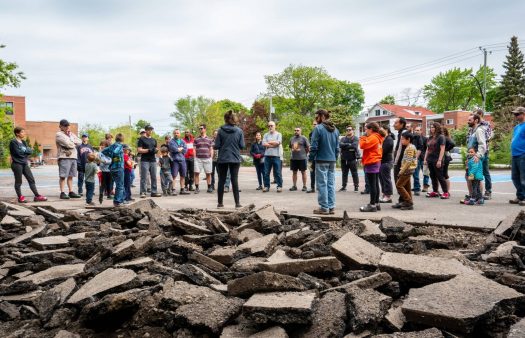
Sponge parks in Montreal

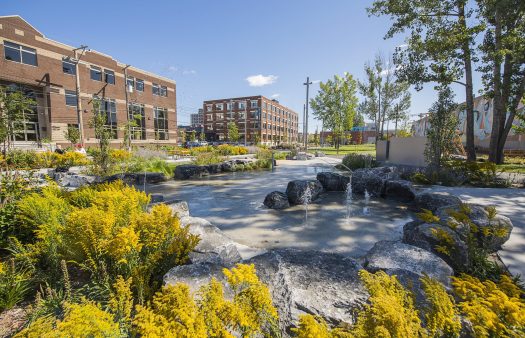
CANUE | Sponge parks in MontrealParc_Dickie_Moore

Image source: Parc Dickie Moore

Text by Marie-Claude Allard, M.A.

Overview

In 2021, the City of Montreal launched a program to promote two complementary initiatives: green street drainage infrastructure and sponge parks. The team responsible for these initiatives, led by Marie Dugué, Section Head of Planning and Major Projects, Water Services, was tasked with providing tools, advice, and financial assistance to boroughs and central services regarding green infrastructure for street drainage and sponge parks. Although these two components were developed simultaneously, they have distinct characteristics in terms of their scale and functions. 

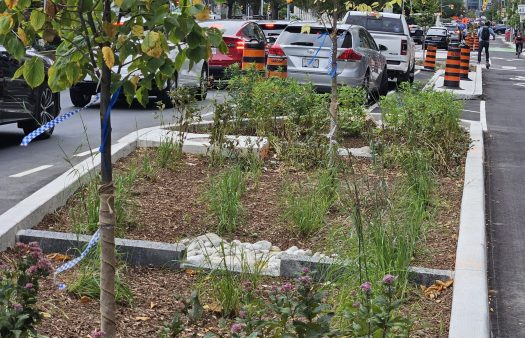
Green infrastructure on streets includes, among other things, vegetated curb extensions located at a lower level than the roadway that capture and infiltrate runoff during light rainfall. The main purpose of such interventions is to reduce sewer overflows by managing small amounts of precipitation. This also promotes greening, reduces heat islands, and improves pedestrian safety.

For their part, sponge parks temporarily capture large volumes of water during heavy storms. Water from surrounding streets is directed at the surface toward a low-impact area (the park), held there, and then returned to the sewer once capacity becomes available again. The purpose of sponge parks is to reduce the frequency of flooding for the surrounding neighbourhoods. 

Referring to the severe storms that hit Montreal in recent years, Dugué explains, “Every time it rains, water enters the street drains. Recently, we’ve had some very severe storms. We had two in 2024, we had others in 2023, and for several years now, we have been experiencing events that exceed all the statistics we usually have. And now, in the sewer system, the water can no longer get in because there is too much water falling on the street. That’s when we try to direct these rivers of water flowing along the streets toward these parks. We want to flood an area of lesser impact in order to protect or reduce the frequency of flooding in residential and commercial areas. So we often hold the water temporarily until the sewer has capacity again. Then, we return the water to the sewer system.”

Since 2022, the City of Montreal has implemented 23 sponge parks. Here is a list of the five largest sponge parks as of 2025, along with their retention capacity:

  • Pierre-Bédard Park / 5,735,000 liters
  • Pilon Park / 1,373,000 liters
  • Park at the intersection of Joseph and Dupuis streets (name to be determined) / 1,067,000 liters
  • Howard Park / 750,000 liters
  • Pierre-Dansereau Park / 627,000 liters

As for green infrastructure, since 2022 the City of Montreal has reached 2,500 “cells” (meaning individual units or functional modules that make up a stormwater management system), either built or under construction, for a total area equivalent to about 6 soccer fields, or roughly 45,000 m².

Related benefits

Although these two components bring greenery to the city and reduce heat islands, one aspect of this project that should not be overlooked is the effort and motivation of the teams. As part of a project that is now proving its worth, each team involved is proud to be part of such an initiative.  As Dugué explains, “What also helps a lot is when you have good examples. Then things start to fall into place.” 

During this period, Ms. Dugué’s team not only carried out pilot projects in urban areas, but also thought strategically about how to continue the actions thereafter. 

Hugo Bourgoin, media relations officer with the City of Montreal’s Public Affairs and Protocol Department added, “What’s wonderful about sponge parks is that 99% of the time, they provide co-benefits. These spaces are used by citizens. Children can go play there, families can picnic in these parks, they use them. And the 1% of the time when  rain is too intense and the sewer system can’t keep up, the park is partially flooded to accommodate that volume of water and relieve some of the pressure on the sewer system.”

A now quantifiable goal

In 2022, the city set a quantitative target: to build 8,500 m² of green infrastructure on streets between 2022 and 2025 and to provide 9,000 m³ of retention capacity in parks over the same period.

These projects would not have been possible without funding from the Ministry of the Environment. Through the green economy program, the city obtained $117 million for various elements, including $15.5 million dedicated to water services. This made it possible to assemble a team of experts to support the boroughs and central services carrying out the projects, producing tools, and conducting research. 

As Dugué explains, these projects are cross-sectoral: “Of course, the project leaders are mostly in the boroughs; they are either in the boroughs or the central service, which is actually the Urban Planning and Mobility Department. The Parks and Sports Department also own these spaces and initiate the projects, commission consultants or design them internally, and supervise the work afterwards. My team is really there to support these teams in integrating water management. One of the interesting players is the Office of Ecological Transition and Resilience, which helps us find funding and increase various benefits.”

Finally, other sources of funding came from the Green Municipal Fund, the Flood Resilience and Adaptation Program (Programme de résilience et d’adaptation face aux inondations – PRAFI in French only), and the Sustainable Stormwater Management Program (Programme pour la gestion durable des eaux de pluie – PGDEP in French only), which are programs of the Ministry of Municipal Affairs, as well as the Disaster Mitigation and Adaptation Fund (DMAF), which is a federal program.

Implementation approach

To properly analyze the environment targeted by the project, the team used topographical data. This made it possible to assess street slopes, catchment areas draining towards a park, and vulnerable low-lying zones. 

As Dugué explains, “It’s important to understand that we took a very opportunistic approach, which may be a little different from other municipalities.  In other words, the City carries out a great deal of rehabilitation work to maintain its assets, including its sewer and water systems under the streets.  So we are rebuilding the entire street with sewers and water mains, and we are also doing a lot of work to refurbish our parks.  So whenever work was planned, we tried to integrate water management into it as well as we could.” 

The goal is to better understand the basin areas in the city in order to identify the most vulnerable areas. Subsequently, the structures built in Montreal’s database are listed for asset management purposes.

Challenges and governance

The main challenge in this project is to train and coordinate a multitude of stakeholders across 19 boroughs.  These stakeholders may include planners, landscape architects, engineers, planning and specification teams, contractors, maintenance workers, and external professionals.  The team chosen must therefore consolidate and coordinate all of these stakeholders, which can be a challenge in itself.

Tools have been put in place to strengthen the capacities of those involved in this project. Approximately 200 training sessions have been provided citywide, as well as internal and external webinars on planning and design, developed by the Regional Council for the Environment (Conseil régional de l’environnement – in French only). In terms of published tools, catalogs, design and construction checklists, and videos documenting maintenance have been used to support those involved.

Outreach and external exchanges

The sponge parks project in Montreal attracts many visitors and encourages the sharing of experiences. In fact, many municipalities in Quebec, as well as countries such as South Korea and New Zealand, are interested in this project. 

“We also participate in pan-Canadian working groups to share our experiences. We were recently invited to Singapore to present our projects. This has helped raise our profile,” explains Dugué.

The comments from Montreal citizens about sponge parks are generally very positive. There is increasing use of these spaces by the population.  However, the current issue hanging over this project, an issue that could be described as a challenge, is its popularity.

“We are actually victims of our own success!  The workload is increasing significantly,” says Dugué

The success of sponge parks and green infrastructure on streets in the City of Montreal demonstrates an innovative approach that can inspire communities here and elsewhere. With this growing interest, it will be interesting to see where new collaborations will emerge to build a more sustainable urban future.


 This project is carried out with funding from the Federation of Canadian Municipalities’ Green Municipal Fund
and the Government of Canada.
CANUE | Sponge parks in Montreallogo fcm eng

Winnipeg’s Equity-Based Urban Forest Strategy

CANUE | Winnipeg’s Equity-Based Urban Forest StrategyWinnipeg_pic2

Images source:
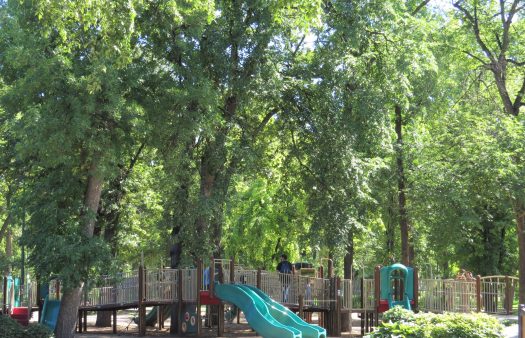
1-Shaded playground in Winnipeg
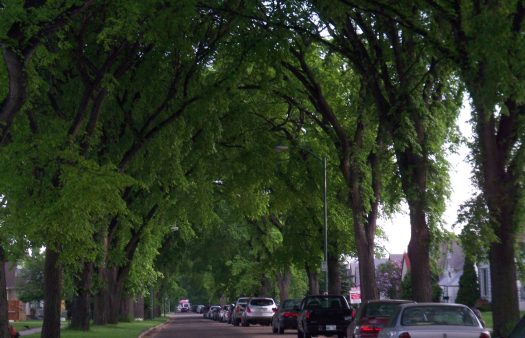
2-Winnipeg – Canopy of elm trees in summer

Text by Kim Perrotta MHSc & Gurleen Arora BHSc

Background

The City of Winnipeg has developed its first Urban Forest Strategy. This is a 20-year strategy that aims to increase tree canopy coverage, diversity of the canopy, and equitable distribution of the canopy across Winnipeg.  

Located in central Canada, the average number of days over 30°C in Winnipeg is projected to increase from 14.3 between 1976-2005 to 30.5 between 2021-2050, making heat adaptation measures crucial to the city’s future.  

Increasing tree canopy coverage is recognized as an effective heat adaptation strategy for urban environments. Trees can decrease air and surface temperatures, reduce the risk of morbidity and mortality due to extreme heat, and reduce ultraviolet radiation exposure. 

Urban Forest Strategy

Winnipeg’s urban forest strategy aims to address several needs: to expand the tree canopy to increase the city’s resilience to the changing climate; to replace the Elm and Ash trees that are being lost to Dutch Elm Disease and an invasive pest called the Emerald Ash Borer; and to ensure that tree canopy is more equitably distributed, particularly in high-needs neighbourhoods that are characterized by higher rates of poverty and lower incomes.  

“The tree canopy we see in Winnipeg today will not be the same canopy we will have in the coming decades,” explained Martha Barwinsky, City Forester at the City of Winnipeg. “Our trees are vulnerable to pests, disease, construction and natural mortality. That is why our strategy is not just about planting more trees. It is about diversifying the trees in our community and building a resilient urban forest that can thrive in the future.”  

The Urban Forest Strategy was finalized and approved by Winnipeg City Council in 2023 along with a budget for its implementation. The strategy commits the City to expanding the tree canopy cover from 17% in 2018 to 24% by 2065. The City has already increased tree planting from a historic 300 trees per year to 6500 trees per year. 

Assessing the Urban Forest

“The strategy took about four years to develop but really was about 20 years in the making. The first step in the process was to assess the current state of the forest,” explained Barwinsky.

Within that 20 year period, the City of Winnipeg collected field data on the trees in parks and on boulevards and potential planting sites throughout the city. The City’s Public Tree Inventory database was developed and now includes over 300,000 trees that are managed by the Urban Forestry Branch in the Parks and Open Space Division within the Public Works Department. This inventory does not include trees in natural areas or on private property.  

“With this snapshot, we could picture the trees we had, what we were losing, where the gaps were, and what we needed to manage,” Barwinsky noted. “One of our goals was to determine where canopy can go, considering all aspects of feasibility including infrastructure, soil conditions, and the community’s need for trees.”

Identifying High Priority Neighbourhoods

Winnipeg’s Urban Forest Strategy identifies the need to maximize tree canopy to protect people from extreme heat, particularly for populations that live on low incomes.  

“Maximizing tree canopy is critical, especially in areas with vulnerable populations who are more susceptible to heat related illnesses. Trees in the urban environment decrease the risk for heatstroke and are associated with a decrease in morbidity and mortality from the effects of heat due to their role in decreasing air and surface temperatures, as well as reducing exposure to ultraviolet radiation.”

“Poverty can be a significant barrier to health, wellbeing, and social equity.  People living in poverty may have few means to access private amenities that can reduce vulnerability to heat, such as shady back yards and in-home or in-care air conditioning … For some people, public trees and forests provide a main opportunity to keep their homes cooler,  provide shade as they walk to school or work, or to experience nature.” 

Areas with higher levels of poverty in Winnipeg were identified in a 2020 report prepared for the City entitled, Defining Higher Needs Neighbourhoods.  It was based on 2016 Census data.  The higher poverty areas were compared against the City’s public tree inventory, temperature data from a hot July day, and canopy data derived from satellite images of the city.  The results revealed that high poverty neighbourhoods had significantly fewer trees per hectare and per person, lower canopy cover, lower tree diversity, and higher average air temperatures, than low poverty neighbourhoods. 

These inequities will be addressed with a number of policies.  For example, the Small-scale and Low-Rise Residential Development Guidelines for Mature Communities, promote the retention of mature trees, particularly for front yards and boulevards, by requiring an arborist report to guide tree preservation and protection during the development process. They dictate the quantity and size (at maturity) of new trees required with each development and the minimum percentage of lot areas and setbacks that must be reserved for soft landscaping.

Community Engagement

“We started to develop the strategy in 2019 and held two rounds of community engagement. We worked closely with advocacy groups in urban forestry and held online stakeholder workshops with community-based organizations,” said Barwinsky.  “Our first engagement was centred around the question, ‘What should Winnipeg’s urban forest look like?’” 

“One of the strongest messages we heard was the pressing need to plant more trees and increase canopy cover,” offered Barwinsky. “Many residents also stressed the importance of tree protection through stronger bylaws, especially as they have observed canopy loss due to development and densification.”

“In the future, when we are not limited by the conditions imposed by a pandemic, we want to do more to establish relationships with diverse and low-income populations that were under-represented in our community engagement process,” said Barwinsky.  “We also want to work with Indigenous communities to incorporate their knowledge and perspectives into tree species selection.”

Multi-Sectoral Collaboration

The Urban Forestry Branch, that led the development of the Urban Forest Strategy, collaborates with divisions across the City including Water Services, Wastewater, Solid Waste, Engineering, Transportation, Street Maintenance, Planning, Zoning and Development, Urban Design, Transit, and Community Services, on the planting and maintenance of trees in parks and on boulevards. 

“The strategy touches just about every division in the City of Winnipeg,” explained Barwinsky. “We have embedded ourselves into the work of each department, which has helped advance understanding of tree needs, soil volume requirements, and tree protection measures.”

The Urban Forestry Branch also provides expert advice for the care of trees outside their direct responsibility.

“We are often asked for advice on the planting and maintenance of trees around transit properties and water treatment plants for example,” explained Barwinsky. “Bringing forestry expertise into every part of the City’s operations helps ensure that trees are adequately protected and, if that’s not feasible, trees are replaced and new trees are planted.”  

Challenges and Lessons Learned

The City faces several challenges in its quest to expand the tree canopy.

“Winnipeg is in a prairie ecological region,” Barwinsky notes. “This is an eco-region that supports grasslands. So, it may appear that we have an abundance of space to plant more trees, but there is also value in protecting and preserving the grassland areas and their ecology.” 

“Older neighbourhoods in high poverty areas and with low tree species diversity are at high risk of losing their canopy to species-specific invasive pests, like Dutch Elm Disease, and much of these neighbourhoods have many obstacles like overhead hydro lines and narrow boulevards that limit where we can plant trees,” explained Barwinsky. “That is why collaboration across departments is central to an urban forest’s success. By coordinating across departments, we can try to develop solutions that make space for trees while meeting other infrastructure needs.”

But Barwinsky identifies that the biggest challenge–one that is universal to cities across the country–is growing tree canopy cover across the city when the city also needs to develop many new homes, including new affordable housing. 

“It is a challenge to grow the tree canopy in a city when we are trying to densify neighbourhoods, create more walkable neighbourhoods with more or wider sidewalks, and build more cycling infrastructure,”  explains Barwinsky. “Infill development and trees are competing for the same space within a city. There is a lot of infrastructure below and above ground that needs to be considered when looking for space for tree planting and for long term maintenance of trees.”

Barwinsky notes that the City of Winnipeg is conducting research on the best way to meet their tree canopy targets, recognizing that there may be a need for different targets for different neighbourhoods and types of land use. 

While trees provide many benefits, Barwinsky notes that not all residents want a tree planted on their property. 

“Trees can be a big responsibility, especially when the leaves fall and residents want to clean them up and when the trees need to be pruned,” said Barwinsky. “Our role is to help residents see the bigger picture– to recognize that trees provide shade, cool air, and reduce extreme heat risks for the whole neighbourhood. Once people understand the connection between trees and heat adaptation, hopefully they start to view them as essential infrastructure.”  

 “We inform residents if they are receiving a tree on their boulevard by providing door hangers with details about the tree planting process,” explained Barwinsky. “We explain how the City maintains and waters trees to establish them, and we also provide contact information if they want to learn more. This kind of transparency and education helps set each tree up for success.”  

“Some neighbourhoods maintain frequent contact with the City directly, while others may communicate through their city councillor,” noted Barwinsky. “Connecting to the community helps us understand what is working for a community and where future outreach may be needed.” 

Funding

The majority of funding for tree planting will come from the budget that the City has allocated to the implementation of the Urban Forest Strategy. The Federal Government’s 2 Billion Trees initiative is currently providing funding for a 5-year Home Grown program to augment the City’s tree planting, and through which community groups can apply for a grant to plant trees on public property in their neighbourhoods. Other grants and tree planting initiatives help support tree planting in the city– on property belonging to schools and institutions, for example– through Tree Canada’s multiple programs and Manitoba Hydro’s Forest Enhancement Program. Trees Winnipeg, a local non-profit organization, supports tree planting projects on school properties, and hosts their ReLeaf Program whereby private property owners can purchase trees at a subsidized cost to plant on their properties.


 This project is carried out with funding from the Federation of Canadian Municipalities’ Green Municipal Fund
and the Government of Canada.
CANUE | Winnipeg’s Equity-Based Urban Forest Strategylogo fcm eng

Managing Coastal Erosion with an Equity Lens in Vancouver

CANUE | Managing Coastal Erosion with an Equity Lens in VancouverVancouver_costal

Image source:
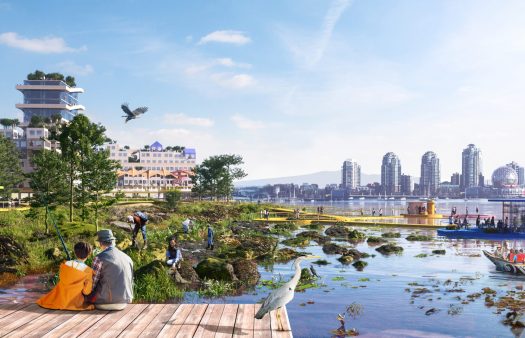
1-Sea2City Coopers Park, Vancouver

Text by Kim Perrotta MHSc

Managing Coastal Flooding

Flood hazard modelling that began in 2012 indicates that Vancouver, a coastal city, needs to be prepared for a 50 cm rise in sea levels by 2050 and 100 cm by 2100, in addition to storm surges and more extreme rainfall events as a result of human-induced climate change.  The City is aiming to prepare for the changing climate with an equity lens that combines community values with technical criteria and solutions drawn from nature as well as traditional grey infrastructure such as concrete.

“Vancouver is a coastal city that has had little experience with major coastal flooding in a settler time period so we have very little flood management infrastructure,” explained Angela Danyluk,  the Manager of the Climate Change Adaptation and Equity team in the Planning Department with the City of Vancouver.  “Using a risk-based approach, we have been thinking about how we can make the city more resilient to rising sea levels and an increasing flood risk in a way that protects people, buildings, infrastructure and the natural environment.”

“We plan to use a variety of adaptation options to manage coastal flooding,” Danyluk said.  “We will use a mix of grey infrastructure such as dikes and nature-based solutions to manage exposure to rising water levels and reduce erosion.  We will also use non-structural tactics such as planning policies and by-laws to manage where and how high buildings can be built.  We will also look to preserve the space needed along shorelines to build flood management infrastructure and apply nature-based solutions well into the future.” 

Bringing Equity in Coastal Flood Management

When an equity lens is applied to coastal flood management, it involves prioritizing where the work is done and how the work will be done.  In 2018 and 2020, Vancouver’s Planning and Engineering Departments initiated a comprehensive planning process for coastal flood management for the Fraser River and False Creek.  The City’s goal was to manage coastal flooding in a way that produced many benefits for the community.   

“Traditionally, coastal flooding is managed by teams led by engineers who usually apply a hard infrastructure approach that results in grey infrastructure such as dikes,” explained Danyluk.  “In Vancouver, we wanted to approach this process differently.  We wanted the pilot project to be evaluated using the seven values-based criteria that were identified by community engagement, as well as technical criteria.  Those values-based criteria included factors related to safety, housing, Indigenous perspectives, recreational opportunities, transportation, culture, and environmental benefits.” 

“We wanted a new approach that fostered open discussions about the trade-offs associated with different designs,” said Danyluk.  “We also wanted to allow room for the process to be informed by the lived experience of those participating.” 

Sea2City Design Challenge

One step in this process was a pilot project called the Sea2City Design Challenge.  This project, which ran from September 2021 to September 2022, was developed to inform the next phase of the City’s Climate Change Adaptation Plan and the City’s coastal adaptation work.  It employed an approach that aimed to restore relationships with the Host First Nations, rebuild connections to the Salish Sea, and employ a “two-eyed way of seeing”, which recognizes and integrates the strengths of both Indigenous and Western ways of knowing.     

Two design teams participated in the Sea2City Design Challenge.  Each one was led by a Designer rather than an Engineer and both teams were supported by a Cultural Advisor.  The Sea2City Design Challenge included: 

  • a 28-member City Advisory Team composed of City staff and representatives and knowledge keepers from the Host First Nations – the Musqueam, Squamish, and Tsleil-Waututh peoples; 
  • a 21-member Technical Advisory Committee composed of experts from local consulting firms, academia, non-governmental organizations, and asset operators such as BC Hydro and Metro Vancouver;  
  • a 17-member Community Advisory Group with residents representing various perspectives from local communities; and
  • a 15-member Youth Adaptation Lab.

One of the key recommendations from the process relates to the language used by the City when addressing coastal erosion.  It was recommended that the language be changed away from “resist, accommodate, and move/avoid” which was seen as colonial language that “sees the water as separate and distinct from the land”.  It was suggested that the language be changed to “acknowledge, host, and restore” to recognize water as “part of a larger, interconnected, and holistic system”.

The Sea2City Design Challenge report defines this new coastal language as:  

  • Acknowledge: spaces are retrofitted or relocated over time to improve their resilience and better care for and steward natural systems.
  • Host: a dynamic place where water, nature, and culture are welcomed and stewarded. Human uses are flexible, adaptable, and leave a light-touch. Infrastructure works with nature to enhance resilience.
  • Restore: a revitalized and rehabilitated shoreline that restores natural functions, features, and ecosystems, and includes improved flood protection for upland communities.

Outcome from an Equity-based Approach

The Cooper Tidal Terrace will be the first pilot project to move forward from the Sea2City Design Challenge.  Construction will begin early in 2026 as part of a larger bridge seismic rehab project and end early in 2027.

“With this stretch of shoreline, a traditional, flat concrete sea wall will be replaced with a terraced design.  The crest of the terrace will be raised to mitigate flooding.  The terrace will be constructed with two tiers of pre-cast concrete.  The outside walls will be textured to encourage sea life, such as seaweed and invertebrates, to attach to the surface.  Inside the terrace will be native plants, shrubs and logs that provide habitat for pollinators and birds.  The plants were reviewed by Host Nations plant knowledge keepers in this area,” said Danyluk.  “The terrace will include inter-tidal habitat and provide pedestrians with access to enjoy and explore the waterfront.  We will also be looking for ways to acknowledge and celebrate the Host First Nations language.”   

Lessons Learned

The City has had a Sustainability Group for over 15 years.  In 2022, it reorganized and repurposed an existing branch to focus on climate adaptation and equity.       

“It is useful to have a team of staff who have the time to plan, problem solve, and project manage climate change adaptation projects in collaboration with other departments,” offered Danyluk.  “Our group is also tasked with securing the funds for pilot projects such as the Coopers Tidal Terrace project.”  

The Sea2City Design Challenge became “a collective learning and capacity-building opportunity for the City, project partners, and design teams” about a “more decolonialized planning approach” to coastal management, offered Danyluk.  


 This project is carried out with funding from the Federation of Canadian Municipalities’ Green Municipal Fund
and the Government of Canada.

CANUE | Managing Coastal Erosion with an Equity Lens in Vancouverlogo fcm eng

Cool Roofs Can be a Great Choice for High Density, Low-Income Neighbourhoods

CANUE | Cool Roofs Can be a Great Choice for High Density, Low-Income NeighbourhoodsBoston2

Image source:
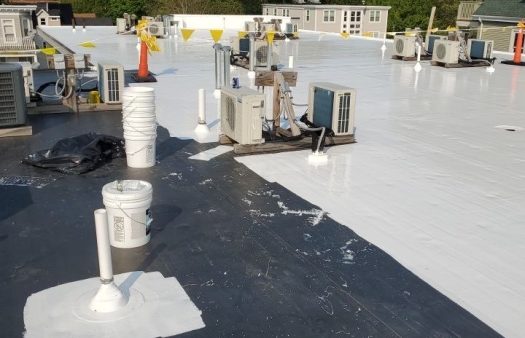
1-Pine Street Boston

Text by Kim Perrotta MHSc

Cool Roofs Cool the Air 

Research conducted at Boston University has demonstrated that cool roofs can greatly reduce heat exposure in high density, low-income neighbourhoods that can be home to people who are at high risk of harm from extreme heat.

Dr. Ian Smith, a post-doctoral researcher at Boston University, studies urban environmental adaptation for vulnerable communities.  He has published several studies on the potential of cool roofs to reduce air temperatures and exposure to heat in high density neighbourhoods that are home to vulnerable populations such as older people, people of colour, and those living on low incomes.  Cool roofs are those that reflect light instead of absorbing it as heat. They are either constructed or renovated with materials that are light in colour or reflective in nature.   

“While we believe that we can cool the air in a neighbourhood by adding reflective surfaces to all roofs, this measure is particularly effective on flat, dark roofs,” Smith explained. “In Boston, many of the roofs are flat and coated in dark, rubbery material that absorbs the heat. This makes cool roofs a strong climate adaptation measure for the City of Boston.”

A 2022 study published by Smith and his colleagues found that:

  • rooftops account for 20% of the total land area in Boston;
  • flat, dark roofs account for over 50% of the roof area within the most vulnerable communities and 23% in the least vulnerable communities, leading to disparities in residential neighbourhoods;
  • residents living in the most vulnerable city blocks experience mean summer land surface temperatures that are 3.0°F warmer than the average temperatures in the least vulnerable city blocks;
  • the conversion of all residential buildings with flat, dark roofs to cool roofs could reduce the mean summertime temperature disparity between the most vulnerable and the least vulnerable residents by 37% (i.e., by 3.0 to 1.9 °F).

Cool Roofs can Reduce Exposure for Vulnerable Populations

In 2025, Smith and his colleagues compared the potential for tree canopy expansion and cool roof measures to reduce air temperatures in neighbourhoods across Boston. The study found that cool roof measures are overall more effective at reducing heat exposure among vulnerable populations in Boston.  Although an expanded tree canopy can reduce air temperatures in a given neighbourhood by a greater amount than cool roofs measures, cool roofs can be applied in dense, low-income neighbourhoods where it can be difficult to find the space needed to grow trees. 

The 2025 study emphasizes that strategies to reduce climate-driven heat should “not only consider the potential magnitude of air temperature reductions, but also the availability of space to implement solutions that reduce air temperatures in densely populated areas.” 

How do Cool Roofs Compare with Trees?

To assess which solution would have the most beneficial impact on the health of Boston residents, the research team developed a model that estimates the effect of implementing cool roofs or expanding tree canopy in areas without them. The model includes air temperature data from a range of urban and rural environments and data related to populations who face higher exposure to, and greater risk from, extreme heat.

 “We assessed heat exposure and vulnerability through several determinants including population density, age, income, race, and education,” Smith explained. “The model demonstrated that many areas of Boston where new tree planting is suitable are located far away from the communities most in need of cooling interventions.”

“For communities that cannot afford or access air conditioners, it is critical that we reduce air temperatures in their neighbourhoods,” offered Smith. “Cool roofs can reduce ambient temperatures at the neighbourhood level, which benefits individuals who rely on passive cooling measures such as open windows.”

“Another factor to consider is timing – how long it takes for residents to experience cooling benefits from an intervention,” Smith explained. “Trees offer significant mental and physical health benefits for cities and their residents, but you have to wait many years before communities experience their cooling benefits. The benefits of a cool roof are immediate. They’re as effective as they’ll ever be on the day that they’re installed.”

“Factoring in the time frame, cost of solutions, and where vulnerable populations are located, our model suggests that cool roofs are more effective in a context similar to Boston’s,” said Smith.


 This project is carried out with funding from the Federation of Canadian Municipalities’ Green Municipal Fund
and the Government of Canada.
CANUE | Cool Roofs Can be a Great Choice for High Density, Low-Income Neighbourhoodslogo fcm eng

Cool Roofs in Underserved Neighbourhoods in Boston

CANUE | Cool Roofs in Underserved Neighbourhoods in BostonPhoto-Pine Street-Boston

Images source:

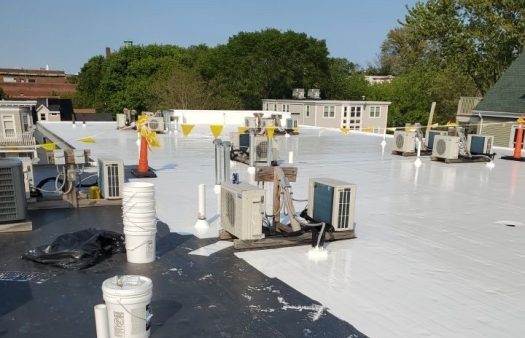
1-Pine Street Boston
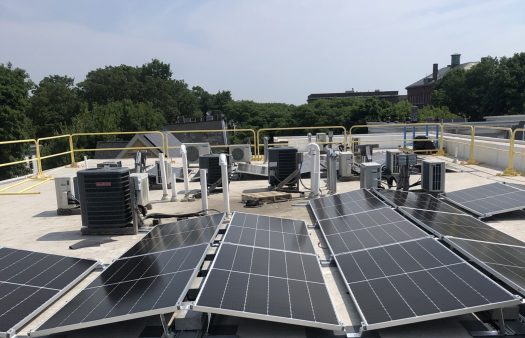
2-Pine with solar – Boston

Text by Gurleen Arora BHSc & Kim Perrotta MHSc

Opportunity Knocks

In 2022, the City of Boston implemented a Cool Roofs Pilot Project to cool underserved neighbourhoods that experience higher temperatures in the summer months.

“The Cool Roofs Pilot Project was somewhat experimental,” offered Zoe Davis, Senior Climate Resilience Project Manager, with the Office of Climate Resilience at the City of Boston. “It was a huge period of opportunity.  We had just completed Boston’s Heat Plan.  Mayor Wu had recently taken office and was eager to address climate change and inequities in the city.  Additionally, there were many funding opportunities for climate-related projects through the Inflation Reduction Act (IRA) and American Rescue Plan Act (ARPA) provided by the federal administration.”  

“The City had 250 gallons of reflective paint left over from another project and the Heat Plan identified cool roofs as an action that could reduce temperatures in some of our underserved neighbourhoods so we moved forward with a cool roofs pilot project,” said Davis.

Boston’s Equity-Based Heat Plan

In 2022, Boston had just completed a comprehensive Heat Plan, Heat Resilience Solutions for Boston, that included geospatial analyses, community engagement, the identification of a broad range of strategies, and simulation modelling. 

The Heat Plan was designed as an equity-centered framework that would reduce the risks and effects of extreme heat, with particular attention to populations in the city that “can experience greater extreme heat exposure and risk, including communities of color, immigrant communities, communities where English is spoken as a second language, older adults, individuals with chronic health conditions, and youth.”  While it will apply to the whole city, it aims to prioritize overburdened neighbourhoods that are disproportionately impacted by extreme heat. 

The Heat Plan was also developed around the premise that “a better, more resilient Boston can create cooler communities and also support broader benefits for justice, equity, and basic improvements to everyday life.” 

Identifying Priority Neighbourhoods 

Heat data was combined with socio-economic data from several sources for 2015-2019 to identify critical hot spots across Boston where high temperatures coincide with historic disinvestment and “environmental justice communities with minority, low- to no-income, and English-isolation characteristics.”  Five neighbourhoods or “focus areas” were prioritized for action with this process – Chinatown, Dorchester, East Boston, Mattapan and Roxbury.  

With Chinatown, for example, which is the hottest of the five prioritized neighbourhoods, the city-wide heat analysis found that day-time and night-time median temperatures (40.6°C and 31.1°C respectively) are 14.4°C hotter than the city’s median day-time and night-time temperatures (37.5°C and 27.7°C respectively).

The urban form analysis found that Chinatown has less green space, wider streets with fewer street trees, and higher population and building densities than other neighbourhoods in Boston.  Tree canopy and parkland make up only 8% and 3% respectively of the land cover in Chinatown compared with 27% and 23% respectively for the city as a whole.  This is a significant difference and helps to explain the temperature difference between Chinatown and the City as a whole.

The socio-economic analysis found that Chinatown is also home to a greater proportion of people who are susceptible to harm from extreme heat: 

  • 15% of its residents are over 65 years of age compared to 12% city-wide;
  • 21% live on low incomes compared to 16% city-wide; and 
  • 84% of the housing units are renter-occupied compared to 64% city-wide.

Older residents are more sensitive to extreme heat.  The Heat Plan notes that those who live on low incomes or live in rental units are less likely to have control over indoor air temperatures and more likely to have chronic health conditions that make them more susceptible to harm from extreme heat. 

Assessing Strategies and Community Engagement

Community engagement for the Heat Plan included a series of five “listening sessions” in each of the five focus areas to appreciate how heat is affecting the lives of their residents and to hear about the critical needs of residents in those areas.

The strategies identified by staff and the community were assessed according to their heat resilience benefits and co-benefits including those related to heat reduction, heat relief, adaptive capacity, public health, environmental impacts, and environmental justice & equity.  

A simulation model was used to estimate the reduction in surface temperature and in perceived temperature for cooling strategies such as light-colored roads, shade canopy, green roofs, and cool roofs.  

Cool Roofs Program 

One of the 26 strategies included in Boston’s Heat Plan was a Cool Roofs Program:

“The City will launch a cool roofs program, which will provide grants to a nonprofit organization to complete cool roof installations on eligible properties. The City will explore additional near-term opportunities to demonstrate large-scale cool roofs on public buildings.”

“Dark-colored roofs can absorb much more heat than lighter-colored roofs,” explained Davis. “In dense urban spaces, they can contribute substantially to urban heat island impacts.  Modelling demonstrated that light-coloured or “cool” roofs can reduce extreme temperatures in localized areas.”   

The Boston Heat Plan notes that cool roofs were also strongly supported by community members with 45% of respondents indicating that they would like to see more cool roofs in their neighborhoods. 

“In 2022, we put out a Request for Applications for a Cool Roofs Pilot Project,” said Davis.  “We were looking for a non-profit organization to do the work because the City cannot really do work on private property.  We had $120,000 we could direct towards this project.”

“We wanted an organization that could implement the project with an equity lens; that  would prioritize disadvantaged and underserved populations,” explained Davis. “We wanted cool roofs to be applied to community assets such as public housing and non-municipal community facilities that provide essential services to vulnerable populations.”

“We awarded the contract to Local Initiatives Support Corporation (LISC) Boston, a non-profit organization with a lot of experience managing similar projects. In the end, three roofs on sizable subsidized housing projects and a homeless services center were treated with the reflective coating,” said Davis. “The program funded 16,000 square feet of cool roof coating. The three buildings were located in the neighbourhoods of Allston and Dorchester.” 

Challenges Encountered and Lessons Learned

Boston’s Cool Roof Program has met with three major challenges; one related to a trained labour force, one related to the timing of funding and approvals, and one related to funding for cool roofs.

“When we initiated this project three years ago, it was difficult to find roofers who were trained or experienced in the use of reflective paints for flat, dark-coloured roofs,” noted Davis. “Hopefully, that will change over time.”

“We noticed some timing issues,” said Davis. “If roof repairs are needed or additional elements like solar panels are to be added to the project, it’s important to consider the amount of time required for building permit processes. For this grant, the timing of the end of the grant period didn’t align with the permit and installation timeline.” 

“Unfortunately, we have not been able to take this program beyond the pilot stage,” explained Davis. “While there is funding for our work on energy efficiency and carbon mitigation retrofits for buildings in underserved neighbourhoods in the city, there is not currently funding for projects that improve climate resiliency, and cool roofs are not currently recognized in energy efficiency and carbon programs as a retrofit that can address these co-benefits.” 

“Some jurisdictions, such as Cambridge, have been able to fold cool roofs into their energy efficiency projects, but in Boston, that type of change has to be made when a program is being developed or re-funded.  We are interested in integrating more resilience solutions including cool roofs into our energy efficiency and carbon mitigation programs in the future,” offered Davis.

Montreal’s White Roofs By-laws

In 2011, the borough, Rosemont–La Petite-Patrie, made it mandatory for all new public and private buildings to have a white or green roof.  Four years later, the borough went one step further.  It adopted a new by-law which stipulates that all new flat-roof constructions must be composed of a white, energy-efficient membrane.  This by-law, which was passed “to promote sustainable development, combat heat islands and contribute to public health by improving air quality” prohibits the use of “multi-layer waterproofing systems composed of bitumen, bitumen felt, fiberglass and gravel” on flat roofs for new buildings.  Rosemont-La-Petite-Patrie was the first borough in Montreal, and perhaps the first jurisdiction in Canada, to require white or cool roofs.  It is estimated that there are nearly 6000 white roofs in Rosemont–La Petite-Patrie. Since then, several boroughs of Montreal have followed its example.


This project is carried out with funding from the Federation of Canadian Municipalities’ Green Municipal Fund
and the Government of Canada.

CANUE | Cool Roofs in Underserved Neighbourhoods in Bostonlogo fcm eng

Toronto’s Equity-Based Green Streets Program

CANUE | Toronto’s Equity-Based Green Streets ProgramToronto2

Images source:
1-Toronto Transportation Services – University avenue, Toronto
2-Toronto Transportation Services – York Street Green Gutter

Text by Kim Perrotta MHSc & Gurleen Arora BHSc

Green Streets Program Goals

Toronto is increasing the city’s climate resilience with an equity-based Green Streets Program.  Established in 2017, Toronto’s Green Streets Program integrates green infrastructure into the design of its streets, sidewalks, and boulevards to reduce air temperatures, enhance air quality, and manage stormwater in neighbourhoods across the city.

This green infrastructure is built into the City’s right-of-way which includes roads, curbs, and sidewalks; all of the publicly owned land that stretches from one property line to another.  By reimagining how these spaces are designed and managed, Toronto is replacing traditional infrastructure with features that reduce urban heat islands (UHIs), manage stormwater, and improve water quality.   

The City is giving priority to neighbourhoods that can benefit the most from green infrastructure in terms of stormwater management, air quality, social equity, tree canopy distribution, and climate resilience. 

Building Climate Resilience

With human-induced global warming, air temperatures and the risk of flooding are increasing in many Canadian cities.  Flooding is also becoming a greater concern in the city.  In July 2024, for example, a flash flood led to power outages and almost $1 billion in insured damages. 

Extreme heat events and flooding resulting from extreme weather and a dense urban environment motivated the City to plan how its rights-of-way could deliver environmental and social benefits.  Green streets integrate features such as bioswales, permeable pavement, rain gardens, and bioretention assets, that can capture and filter stormwater while also cooling surrounding air through evapotranspiration. 

Initiating a Green Streets Program

Toronto’s work on green streets began in 2013 after 60 mm of rain fell overnight and the Don River flooded some of the city’s major highways including the Don Valley Parkway. 

“ This large storm gave rise to a City Council directive to develop green infrastructure standards to help manage the city’s stormwater in the right-of-way,” explained Kristina Hausmanis, Senior Project Manager, Green Streets Program, City of Toronto.

From 2013 to 2017, City Planning and Toronto Water collaborated to develop Green Streets Technical Guidelines while also piloting green infrastructure projects.  Early work focused on large, underused right-of-way areas such as traffic islands.  These were converted into bioretention sites by removing excess asphalt and adding curb cuts to direct runoff on to the greenery.

 When a new General Manager, who had experience with Seattle’s Green Streets Program, joined Transportation Services, the Green Street vision was expanded. 

“ With the new General Manager on board, it was decided that the Transportation Division, which has responsibility for the city’s right-of-way, should play a bigger role in the implementation of green streets infrastructure, ” explained Hausmanis. “ To scale up the program, it was recognized that we needed a clear governance model and  defined asset ownership.” 

Multi-Sectoral Collaboration

The installation and maintenance of green streets infrastructure involves several divisions within the City so there is a need to work collaboratively across all divisions.  A governance model was established in 2017 that brought several divisions together including Transportation Services, Engineering and Construction Services, City Planning, Parks, Forestry, and Recreation, (now  Environment, Climate and Forestry), and Toronto Water.  

A Steering Committee was created, supported by a staff-level working group, to coordinate the development and implementation of green streets infrastructure across the city.  As the primary owner of the right-of-way assets, Transportation Services assumed leadership for the Green Streets Program. 

“ We, in Transportation Services, own and are responsible for the green infrastructure assets in the right-of-way, but other divisions are essential to the project’s success,” offered Hausmanis. “ For example, Toronto Water is responsible for flushing out catch basins going into green infrastructure and Urban Forestry takes care of street trees.” 

The City has also partnered with non-profit organizations.  For example, the City is collaborating with the Toronto Region Conservation Authority (TRCA) via their Sustainable Technology Evaluation Program (STEP) on the evaluation and monitoring of green infrastructure sites in the city,” explained Hausmanis. 

The City has also collaborated with non-profit organizations on its workforce development program, GreenForceTO, that was initiated in 2021.  Transportation Services partnered with two local Employment Social Enterprises, RAINscapeTO and Building Up, to hire and train individuals from      Neighbourhood Improvement Areas in the city and people experiencing barriers to employment, for the maintenance of green streets infrastructure.  Neighbourhood Improvement Areas are neighbourhoods that need support to improve the wellness of their residents based on economic opportunities, social development, health, community engagement, and physical characteristics of their communities.   

Prioritizing Neighbourhoods for Green Infrastructure

With over 5400 km of roadways, Toronto required a systematic approach to prioritize  locations for green infrastructure.

“ We are moving from a model that was based solely on opportunities to pilot green infrastructure to one that considers program benefits,” explained Anisha Patel, Project Manager, Green Streets Program, City of Toronto. “ We are looking for neighbourhoods that would benefit most from green infrastructure interventions by assessing both vulnerabilities and opportunities in neighbourhoods across the city.” 

This approach evaluates where green infrastructure can be most beneficial at reducing climate vulnerabilities, improving the quality of life for residents, and decreasing social inequities, while also considering the physical opportunities for installation.  

This selection process involves three stages: 

    • Geospatial Analysis: With the first stage, a model is used to prioritize projects based on the co-benefits that can be gained with green infrastructure. This model allocates a score for five green infrastructure co-benefits:
      • Stormwater Management which is based on data related to combined sewer overflow areas, storm sewers that flow into environmentally sensitive areas, impervious surfaces, and rainfall distribution; 
      • Air Quality which is based on data related to the density of senior or childcare facilities within areas with high levels of traffic-related air pollution; 
      • Tree Canopy Cover based on tree canopy distribution;
      • Social Wellness which is based onNeighbourhood Improvement Areas identified by the City; and 
      • Climate Resilience which is based on extreme heat vulnerability maps and areas identified as vulnerable to storm-related floods. 

Projects in the top percentile are then selected for the second stage.

  • Desktop Analysis:  In the second stage, the suitability of the site for green infrastructure implementation is evaluated using factors such as space available, soil conditions, site coordination conflicts, and public visibility.

  • Stakeholder Coordination:  The third stage draws upon the expertise of the Green Streets Working Group and others to identify the scope and budget needed for the project and to coordinate implementation.  

The City is in the process of developing key performance indicators and implementation processes to guide how green infrastructure will be installed and evaluated in these targeted neighbourhoods. 

Community Engagement

Community engagement plays an important role in Toronto’s Green Streets Program.  The City works directly with communities.  It offers choices to impacted residents to select the green infrastructure options that work best for them.

“ Some neighbourhoods have open ditches that can be transformed into bioswales,” said Hausmanis. “ When the City installs these bioswales, residents are provided with native and suitable plant options, which they are expected to maintain after installation.  However,  if residents prefer not to have a garden, they can opt for sod, which still provides the water quality benefits of green infrastructure.” 

Challenges and Lessons Learned

The Green Streets team has learned that project feasibility varies by location. 

“ Suburban areas such as Etobicoke and Scarborough provide more space for green infrastructure than Toronto’s urban core,” stated Hausmanis.

City staff have learned that education and outreach are important for public acceptance of green infrastructure.  

“ While attitudes are shifting towards natural gardens, many residents still prefer the look of manicured sod,” said Hausmanis. “ It is important that we educate residents about the benefits of green infrastructure.  We plan to develop educational materials such as infographics to help them understand the value of these features.”

There have also been challenges with utility contractors and construction activity damaging green infrastructure assets. 

“ The City has the Municipal Consent Requirements that outline requirements for working within the city right-of-way.  However, these requirements do not reference how developers or utility contractors are to work within or around green infrastructure assets,” explained Patel. “ We need to update these requirements to ensure that green infrastructure is protected when it is worked around”

Funding

The cost of green infrastructure is project dependent. The standard cost of reconstruction in the right-of-way is calculated and the Green Streets Program covers the additional cost of incorporating green infrastructure, which is typically about 30-40% more for linear green infrastructure.

“ We have not been able to estimate the cost savings created with green infrastructure yet,” noted Patel. “ The reduction in air temperature and stormwater management are incremental with each project, so it is hard to say how much harm and damage is being prevented with each project.  Over time and cumulatively, we expect that there will be considerable financial and health savings, but we don’t have the data to demonstrate that yet.”  


Green Streets Features

 Toronto’s green infrastructure features include the following

  • Continuous Soil Trenches and Stormwater Tree Trenches: Trenches placed beside walkways that collect stormwater into planters and direct it to trees.
  • Bioretention Assets: Garden-like structures including cells, planters, and curb extensions that collect and filter stormwater, allowing some of the water to support native plants.
  • Bioswales: Linear, vegetated channels that slow down, treat, and store stormwater temporarily.
  • Enhanced Grass Swales: A gently-sloped channel that reduces stormwater runoff and cleans stormwater as it flows.
  • Green Gutters: Shallow, vegetated planters installed along a street’s length to capture and filter runoff while separating transportation corridors (e.g., vehicle traffic, bikes, transit lanes).
  • Vegetated Filter Strips: Gently-sloped, vegetated areas that are installed adjacent to impervious surfaces to treat and reduce stormwater runoff.
  • Permeable Pavement: Paving materials that consist of small pores and allow rainwater to drain into an aggregate storage layer temporarily before being conveyed into native soil or other drainage systems. These materials include permeable interlocking concrete pavers, porous asphalt, and pervious concrete.
  • Infiltration Trenches: An underground trench made up of geotextile-lined excavations that temporarily holds and treats stormwater.
  • Rain Gardens: A shallow, sunken planting bed composed of highly permeable soil that collects rainwater, filters it through the soil and plants, and prevents standing water.

 This project is carried out with funding from the Federation of Canadian Municipalities’ Green Municipal Fund
and the Government of Canada.
CANUE | Toronto’s Equity-Based Green Streets Programlogo fcm eng

Greening Underserved Schools while Preventing Floods in Chicago

CANUE | Greening Underserved Schools while Preventing Floods in ChicagoGrissom After

Images source:
Space to Grow Program – 
Grissom Elementary School

Text by Gurleen Arora BHSc & Kim Perrotta MHSc

Space to Grow Program

Since 2013, the Space to Grow program in Chicago has transformed over 36 schoolyards, with 5 more currently under construction, serving more than 36,000 students, families, and community members in under-served neighbourhoods with greenery and green stormwater infrastructure. 

“When mandated recess was brought back to schools in Chicago in 2011, communities noted that the schoolyards where children played were neither safe, nor healthy. Many schoolyards had broken equipment and asphalt-dominant grounds, along with flooding issues in nearby neighbourhoods.”
CANUE | Greening Underserved Schools while Preventing Floods in ChicagoEmily Zhang Headshot
Emily Zhang
Space to Grow Project Manager at the Healthy Schools Campaign

The Space to Grow program was established that year when two non-profit organizations partnered with Chicago Public Schools and two public water agencies to transform schoolyards in under-resourced neighbourhoods into green oases that reduce flooding.

“The Space to Grow program prioritizes historically disinvested and underserved areas in Chicago,” explained Zhang. “These communities have been shaped by historic policies that systematically restricted public investment in communities of color.”

Multi-Sectoral Collaboration

The Space to Grow program operates through a collaboration between the non-profit organizations, the Healthy Schools Campaign and Openlands, along with three public agencies, the Chicago Public Schools, the Metropolitan Water Reclamation District of Greater Chicago, and the Chicago Department of Water Management.

Each partner organization has its own goals. The two water agencies are working to  reduce the risk of floods and protect water quality in the city. Chicago Public Schools aims to provide safe and welcoming schoolyards for its students and their families. Openlands is dedicated to connecting people with nature and greening urban areas.  And the Healthy School Campaign seeks to address systemic barriers; to provide children in under-resourced neighbourhoods with safe and vibrant outdoor spaces that support health and well-being. 

“Through our aligned goals, we work together to redesign and revitalize outdoor school spaces. The non-profit organizations coordinate work between the partners, facilitate community engagement on all elements of the work, and provide technical assistance and educational programming to schools. The public agencies provide leadership, expertise,and funding for the design and construction of the schoolyards. Funding from the two water agencies is guided by each schoolyard’s potential to reduce stormwater runoff through green infrastructure,” Zhang explained.

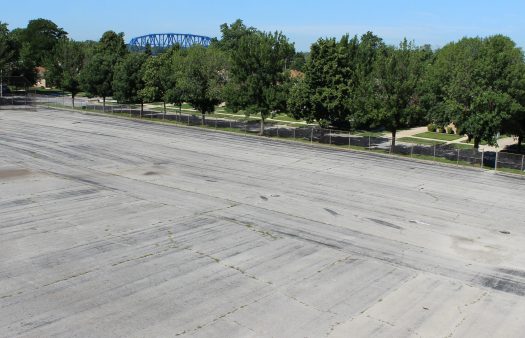
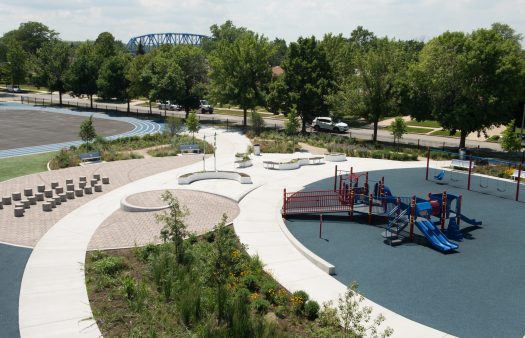
Images source: Space to Grow Program – Nathan S. Davis Elementary School

Green Infrastructure and Green Space 

Space to Grow uses green stormwater infrastructure, systems and features that incorporate or mimic nature-based solutions to capture stormwater on-site and reduce sewer system strain.  Chamber systems are installed below the surface to catch water on schoolyards.  Asphalt is replaced with permeable surfaces, native plants, rain gardens, and bioswales to absorb and filter stormwater.

These measures offer significant benefits for flood prevention.  At Grissom Elementary School, for example, it was estimated that the project would entirely eliminate runoff volume and remove nearly all pollutants from the water for over 99% of all storms. 

The infrastructure and landscaping design for each schoolyard is informed by the needs of the students and the surrounding community. 

”At our recent renovation at Brown Community Academy, the schoolyard design had to support students from pre-kindergarten to grade 8, so we wanted to ensure that there were spaces for different activities and sports, while also integrating a nearby rain garden to absorb water,” said Zhang. 

The community design process identified key priorities for the school, including creating opportunities for outdoor learning, nature play, and growing food. 

“We transformed a courtyard space into a nature play area and an outdoor classroom, and we added raised planters and edible garden beds,” said Zhang. 

“Partners at Loyola University and the University of California’s Nutrition Policy Institute have done studies around the use of renovated schoolyards and have seen an increase in the use of physical space across genders and all age groups and found that these schoolyards promote a more positive relationship between the schools and community,” explained Zhang.

Engaging the Community 

Space to Grow uses a participatory approach so the community is involved at every stage of their schoolyard’s transformation.  

“Once a school is selected, we begin with a planning process that includes meetings with school leaders, parents and caregivers and neighbours,” explained Zhang. “We also help form a Space to Grow Committee for each schoolyard that includes trusted messengers from the community who can communicate with various stakeholders.”

“Trusted community members are the best messengers,” said Zhang. “Committee members with strong local networks help ensure that the school community feels heard and stays informed.”

During the planning phase, students and community members share what they want from their schoolyards.  Landscape architects and engineers, who participate in these meetings, translate the community’s visions into schematic designs.  Ongoing workshops allow designers to get real-time feedback from community members before finalizing a design.

“The design team is involved in every conversation with community members,” explained Zhang. “This project is not just about us relaying information about the schoolyards to the community.  It is about co-creating spaces that reflect local needs while allowing communities to build climate resilience.”

Prioritizing Schools Based on Flood Exposure and Social Equity

The initial school selection process is based on three primary criteria:

  • High flood risk areas;
  • High need for playground or playground renovation; and
  • The Chicago Public Schools Equity Index. 

The city’s water department uses a geospatial approach to identify schools that are in locations with a high risk for basement flooding. The Chicago Public School Equity Index assesses school conditions, community conditions, and historical capital investment patterns to prioritize schools most in need of upgrades.

“Almost all the schoolyards that we have renovated are located on the south and west sides of Chicago,” noted Zhang. “Many of these communities have a legacy of redlining and disinvestment. When you overlay maps of historic redlining with tree canopy, heat vulnerability, and other health disparities, the patterns are striking. These are the communities that have been overlooked for too long and where intentional investment can make the greatest impact.” 

Redlining was a racist policy that prevented people of colour from obtaining mortgages based on neighbourhood value.  Although the practice has been illegal since 1968 in the United States, its legacy endures.  Residents living in redlined neighbourhoods today experience higher exposure to air, water, and noise pollution. Beyond redlining, other discriminatory housing policies and practices such as exclusionary zoning, inequitable code enforcement, and disinvestment continue to result in the lack of access to safe, healthy and affordable housing.

Once a school meets the initial eligibility criteria, it can apply to the Space to Grow program.  Final selection is based on flood risk, feasibility of schoolyard development, access to green spaces, socioeconomic factors, and school participation readiness for renovations. Three or four schools are selected each year.  It can cost between $1.5 – $4 million to transform a schoolyard.

Challenges and Lessons Learned

The Space to Grow program found that the maintenance and management of the transformed schoolyards was an initial challenge.  

Now, school caretakers are better trained on the maintenance needs once the renovations are completed.  Chicago Public Schools have also contracted firms with specialized training to steward the spaces.

Teachers receive professional development to orient them to the green spaces, to understand their benefits, and learn how they can use them in classes and after-school programming.  

“Through evaluation processes, school staff have reported increased job satisfaction because of transformed schoolyards,” said Zhang.  

The transformed schoolyards are also open to the community for use. The Space to Grow team has found that the schoolyards are generally treated with respect by the community.

“The best way to maintain these spaces over the long term is by involving the community in their development,” Zhang concluded. “When communities are empowered through community building, they feel ownership over their schoolyards and want to care for them.”

However, ongoing maintenance remains a challenge.  While community involvement fosters a sense of stewardship, school staff and partners have noted that clear roles, consistent resources, and dedicated funding streams are essential to keep the schoolyards vibrant and functional. Tasks like garden care, trash removal, and green stormwater infrastructure upkeep require coordination between the school district, individual schools, public agencies, and communities.  The Space to Grow partners continue to explore innovative models for shared maintenance – leveraging volunteer days, student engagement and interagency collaboration to sustain these vital green spaces over time.

This project is carried out with funding from the Federation of Canadian Municipalities’ Green Municipal Fund
and the Government of Canada.

CANUE | Greening Underserved Schools while Preventing Floods in Chicagologo fcm eng

Hamilton’s Equity-Based Heat Response Plan

CANUE | Hamilton’s Equity-Based Heat Response PlanKPerrotta -Spray Pool-Hamilton-July 2025
CANUE | Hamilton’s Equity-Based Heat Response Plan Image Name

Image source and text by Kim Perrotta MHSc

Heat in Hamilton

The City of Hamilton has developed an equity-based Community Heat Response Strategy to offer greater protection to those people in its community who are at greatest risk of harm from extreme heat.  

With human-fueled climate change, extreme heat is becoming a greater health concern for communities across Canada.  In Hamilton, which wraps around the western tip of Lake Ontario, the mean number of days over 30 degree C is on track to increase from 16.2 between 1976-2005 to 37.2 between 2021 and 2050.  (https://climateatlas.ca/)

Who is at greatest risk?

Everyone is at risk from heat-related illnesses and death from extreme heat, but some populations are at greater risk.  At-risk populations include older people, very young children, and those with pre-existing health conditions; outdoor workers, migrant workers, and those who live or work in urban heat islands without air conditioning; and those who live on low-income or are unhoused. 

Multi-Sectoral Collaboration  

Hamilton’s Community Heat Response Strategy is only one component of the city’s overall Climate Change Action Plan. This strategy is being led by Public Health Services, which is part of the Healthy and Safe Communities department within the City.  The strategy is being developed and implemented in collaboration with several other divisions and departments within the City including Housing Services, City Housing, Parks and Cemeteries, the City’s transit authority, Recreation, and the Hamilton Public Library. 

“One of the strengths of our strategy is that it has been developed with expertise and resources from so many departments. Opportunities that we may not have considered have been brought to the table by other departments along with the resources to implement them.”
Shelly Rogers
Project Manager, Air Quality and Climate Change with Public Health Services

CANUE | Hamilton’s Equity-Based Heat Response Plancommunity_heat_response_strategy

The Community Heat Response Strategy includes 10 elements that are the responsibility of different departments within the City.  Several of those elements are common to Heat Alert and Response Systems (HARS) offered by public health agencies and/or municipalities across the country including: heat warnings, education, the provision of cool spaces for at-risk populations, and population surveillance for heat-related illnesses and calls for emergency services.

A few elements in Hamilton’s strategy go beyond those commonly included in HARS such as the expansion of the tree canopy and the installation of shade structures and misting stations in parks.  It also includes several innovative elements that are directed specifically at the health needs of at-risk populations:

  • Wellness Check-ins:

    Wellness check-ins are provided by the City’s paramedics for older adults and those with pre-existing health conditions who have enrolled for the Mobile Integrated Health Program.

  • Cool Kits:

    City staff and community organizations distribute Cool Kits to high-risk populations.  For housed people, Cool Kits include ice packs, reusable water bottles, cooling neckties, fridge magnets with health tips, thermometers, and information on the health impacts of extreme heat.  The Cool Kits for unhoused people include hats, sunglasses, sunscreen, reusable water bottles, and a list of cool spaces and locations to refill water bottles across the city.

  • Cooling Support: 

    In 2024, the City launched a pilot program to help low-income individuals with medical conditions that are aggravated by heat to stay cool at home.  Eligible residents could receive a one-time $350 subsidy per household to buy an energy-efficient air conditioner to cool one area of their homes.  

Originally, the program was only available to people receiving Social Assistance but the pilot has expanded eligibility to include anyone living below the Low Income Measure.  This program is budgeted to continue in 2025 with up to 50 eligible households being supported each year on a first-come, first-served basis.  This expanded support is in addition to the existing air conditioner program offered for Social Assistance recipients.

  • Adequate Temperature Bylaw: 

    At the request of City Council, City staff are developing an Adequate Temperature By-Law that may provide maximum temperatures for residential rental units within the city.

  • Transportation to Cool Spaces: 

    In 2024, 2000 bus tickets were allocated to at-risk populations to help them reach cool spaces during extreme heat events.  These tickets were distributed by City staff and community partners to unhoused and low-income populations in Cool Kits and through recreational centres across the city.

Community Engagement

The strategy has been informed and supported by a broad group of individuals and organizations from the community that represent or serve different at-risk populations within the city.  These community partners include groups such as ACORN that advocate on behalf of tenants, the Accessibility Committee for Persons with Disabilities, The Seniors Advisory Committee, Environment Hamilton, the YWCA, the Hamilton Community Legal Clinic, and the Hamilton and District Apartment Association.  

Community partners have been included in virtual meetings facilitated by Public Health Services along with staff from other departments.  This group of people, which is called the Extreme Heat Working Group, includes over 40 people.  These meetings have been used to provide updates from City staff, solicit advice from community members, and coordinate actions across City departments and community groups.  

“Community engagement has been crucial to the development and implementation of the strategy,” noted Rogers.  “Community members have offered fresh ideas and practical advice that is based on their lived experience or that of the people they serve.  The community groups have also brought resources and support to the table.  For example, they helped us distribute Cool Kits and health information to the at-risk populations that we are trying to reach.” 

Identified those at risk with geospatial tools 

Hamilton staff worked with the interactive mapping tool developed by Université Laval to identify the areas in the city that are home to high-risk populations.  They used socio-economic data related to factors such as age, income, and the type of dwelling, and environmental data such as surface temperature and vegetation in this mapping exercise.  The mapping tool identified Wards 2, 3, and 4, that border heavy industry on the south shore of Lake Ontario, as the neighbourhoods with the populations at greatest risk from extreme heat. (Figure from https://healthyplan.city/en)

“We have used the geospatial tool to: identify the neighbourhoods that should be prioritized for Cool Kits and educational resources; create maps that identify the location of cool spaces for at-risk populations; and evaluate our programs to see if they are reaching the neighbourhoods with the greatest need,” explained Rogers.

CANUE | Hamilton’s Equity-Based Heat Response PlanHamilton_HPC_ENG

Challenges and Lessons Learned:

“The toughest part of this process has been scoping it,” said Rogers. “There is so much that can and should be done to protect high-risk populations from extreme heat. But we knew if the scope was too broad, it would be easy to lose focus. So we have tried to identify actions that could make a big difference in peoples’ lives within the next 5 years.”
“Working across city departments has been extremely valuable,” offered Rogers. “The process has helped us to cultivate relationships with staff in other departments and to understand what the other departments do and how we can support one another.”
“We have also learned so much from the community engagement process” Rogers noted. “Once we began the process, people from the community were asking to be involved. They have been excited to have a voice on something that is so important to them and their community.”

Funding: There was no external funding for this work.  All of the funding came from the operational budgets of various departments across the City as well as the Climate Change Reserve.

This project is carried out with funding from the Federation of Canadian Municipalities’ Green Municipal Fund
and the Government of Canada.
CANUE | Hamilton’s Equity-Based Heat Response Planlogo fcm eng