Webinar 5 – Toronto’s Equity-Based Green Streets Program

CANUE | Webinar 5 - Toronto’s Equity-Based Green Streets Programtoronto_zoom_events


 ➡️ Is your municipality working to control stormwater, reduce flooding, and decrease water pollution?

➡️ Are you trying to green city streets and cool neighbourhoods?

➡️ Is your municipality working to protect those at greatest risk of harm from climate-related impacts? 


Come learn about Toronto’s Equity-based Green Streets program:

• how it was set up
• what neighbourhoods are being prioritized
• what it looks like in practice. 

Intended Audience:

  • Municipal staff working in public works, water management, sustainable development, parks and recreation, community services, transportation services
  • Staff working in public health

December 3rd 2025 | 1pm-2pm (EDT)

Speakers

CANUE | Webinar 5 - Toronto’s Equity-Based Green Streets ProgramHausmanis_headshot

Kristina Hausmanis

Senior Project Manager,
Green Streets
Transportation Services

Kristina has spent over 18 years working in municipal government developing and implementing multidisciplinary programs at the City of Toronto.  In her current position as the Green Streets Senior Project Manager for Transportation Services, she coordinates the implementation of green infrastructure into right-of-way projects and is the chair of the City’s Green Street Working Group.  Kristina holds a Bachelor of Science in Biology from McGill University and a Master of Environmental Science from the University of Toronto Scarborough Campus. She is also a member of the Green Infrastructure Leadership Exchange and the American Public Works Association’s Sustainability and Resilience Committee.

CANUE | Webinar 5 - Toronto’s Equity-Based Green Streets ProgramNiloufar Mohajerani

Niloufar Mohajerani, M.A.Sc., P.Eng.

Senior Engineer
Stormwater Management Infrastructure

Design & Construction
Linear Underground Infrastructure

Engineering & Construction Services
City of Toronto

Nilou is a senior engineer with 12 years of experience with the City of Toronto. She is responsible for delivery of multi-million stromwater management capital projects
including green infrastructure installation within the Right-of Way and leads the design and construction of Green Infrastructure as a naturalize solution for building climate resiliency in Toronto. Her projects encompass various phases of building an infrastructure from design to construction and monitoring.
Nilou holds a bachelor degree in chemical engineering and a master’s degree in
environmental engineering.
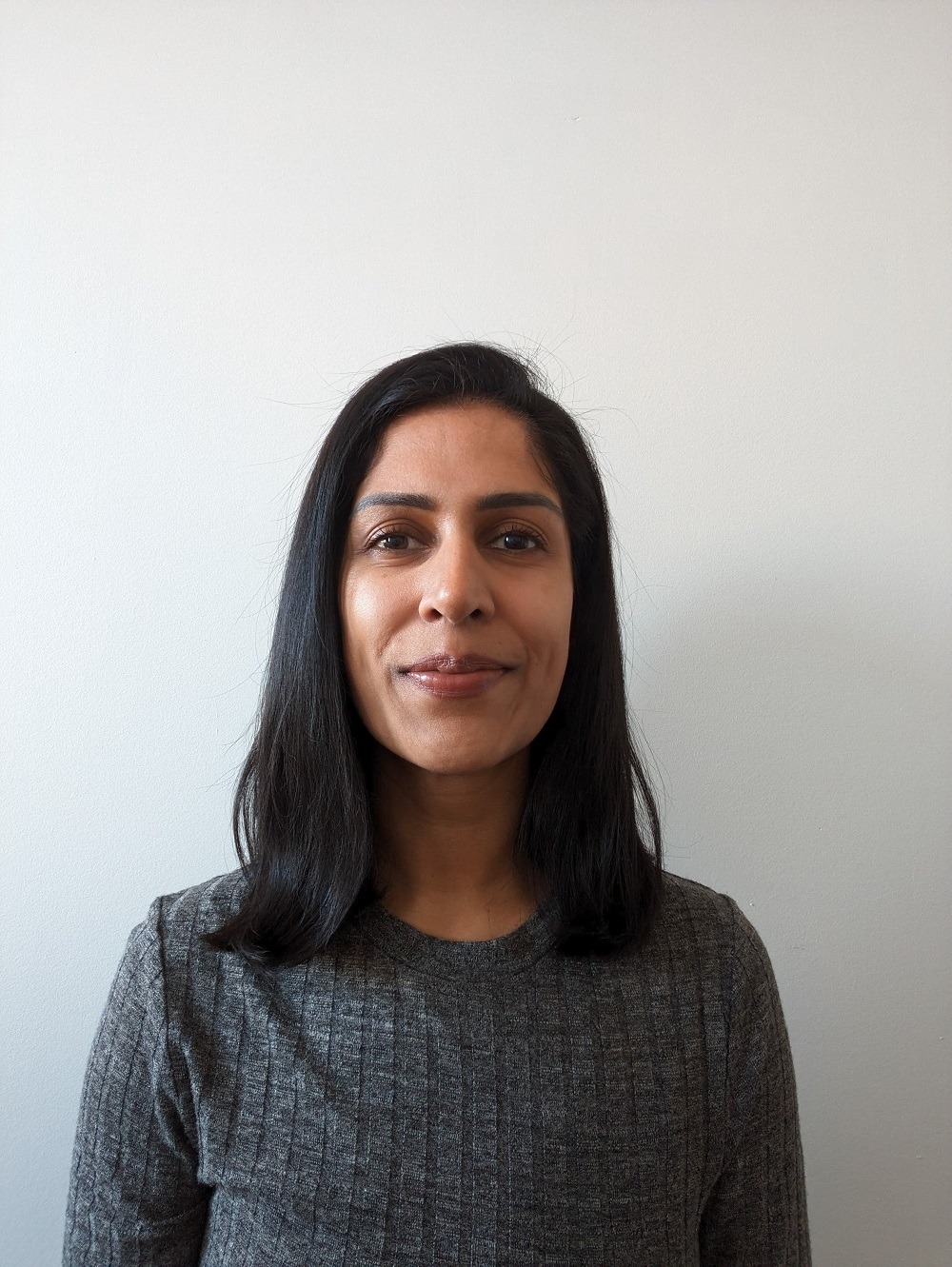
CANUE | Webinar 5 - Toronto’s Equity-Based Green Streets Programanisha- photo

Anisha Patel

Project Manager
Asset Management (Green Streets)
Transportation Services

Anisha is a Project Manager with the City’s Transportation Services Division in the City of Toronto with a focus on the City’s Green Streets Program. She holds a Bachelor’s degree of Applied Science in Environmental Engineering from the University of Waterloo. Her 12-year career at the City has been focused around the planning, design and construction of municipal infrastructure.

To view recording, click on the image below:

This project is carried out with funding from the Federation of Canadian Municipalities’ Green Municipal Fund
and the Government of Canada.

CANUE | Webinar 5 - Toronto’s Equity-Based Green Streets Programv2LogoFCM_ENG

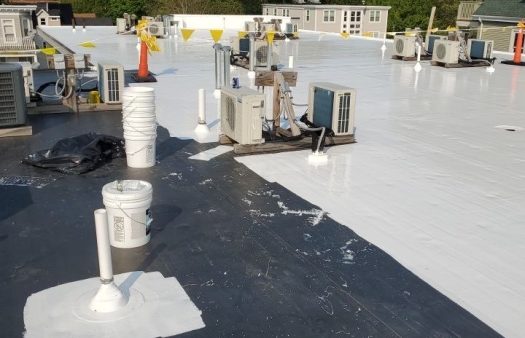
Cool Roofs Can be a Great Choice for High Density, Low-Income Neighbourhoods

Image source:
1-Pine Street Boston

Cool Roofs Cool the Air 

Research conducted at Boston University has demonstrated that cool roofs can greatly reduce heat exposure in high density, low-income neighbourhoods that can be home to people who are at high risk of harm from extreme heat.

Dr. Ian Smith, a post-doctoral researcher at Boston University, studies urban environmental adaptation for vulnerable communities.  He has published several studies on the potential of cool roofs to reduce air temperatures and exposure to heat in high density neighbourhoods that are home to vulnerable populations such as older people, people of colour, and those living on low incomes.  Cool roofs are those that reflect light instead of absorbing it as heat. They are either constructed or renovated with materials that are light in colour or reflective in nature.   

“While we believe that we can cool the air in a neighbourhood by adding reflective surfaces to all roofs, this measure is particularly effective on flat, dark roofs,” Smith explained. “In Boston, many of the roofs are flat and coated in dark, rubbery material that absorbs the heat. This makes cool roofs a strong climate adaptation measure for the City of Boston.”

A 2022 study published by Smith and his colleagues found that:

  • rooftops account for 20% of the total land area in Boston;
  • flat, dark roofs account for over 50% of the roof area within the most vulnerable communities and 23% in the least vulnerable communities, leading to disparities in residential neighbourhoods;
  • residents living in the most vulnerable city blocks experience mean summer land surface temperatures that are 3.0°F warmer than the average temperatures in the least vulnerable city blocks;
  • the conversion of all residential buildings with flat, dark roofs to cool roofs could reduce the mean summertime temperature disparity between the most vulnerable and the least vulnerable residents by 37% (i.e., by 3.0 to 1.9 °F).

Cool Roofs can Reduce Exposure for Vulnerable Populations

In 2025, Smith and his colleagues compared the potential for tree canopy expansion and cool roof measures to reduce air temperatures in neighbourhoods across Boston. The study found that cool roof measures are overall more effective at reducing heat exposure among vulnerable populations in Boston.  Although an expanded tree canopy can reduce air temperatures in a given neighbourhood by a greater amount than cool roofs measures, cool roofs can be applied in dense, low-income neighbourhoods where it can be difficult to find the space needed to grow trees. 

The 2025 study emphasizes that strategies to reduce climate-driven heat should “not only consider the potential magnitude of air temperature reductions, but also the availability of space to implement solutions that reduce air temperatures in densely populated areas.” 

How do Cool Roofs Compare with Trees?

To assess which solution would have the most beneficial impact on the health of Boston residents, the research team developed a model that estimates the effect of implementing cool roofs or expanding tree canopy in areas without them. The model includes air temperature data from a range of urban and rural environments and data related to populations who face higher exposure to, and greater risk from, extreme heat.

 “We assessed heat exposure and vulnerability through several determinants including population density, age, income, race, and education,” Smith explained. “The model demonstrated that many areas of Boston where new tree planting is suitable are located far away from the communities most in need of cooling interventions.”

“For communities that cannot afford or access air conditioners, it is critical that we reduce air temperatures in their neighbourhoods,” offered Smith. “Cool roofs can reduce ambient temperatures at the neighbourhood level, which benefits individuals who rely on passive cooling measures such as open windows.”

“Another factor to consider is timing – how long it takes for residents to experience cooling benefits from an intervention,” Smith explained. “Trees offer significant mental and physical health benefits for cities and their residents, but you have to wait many years before communities experience their cooling benefits. The benefits of a cool roof are immediate. They’re as effective as they’ll ever be on the day that they’re installed.”

“Factoring in the time frame, cost of solutions, and where vulnerable populations are located, our model suggests that cool roofs are more effective in a context similar to Boston’s,” said Smith.


 This project is carried out with funding from the Federation of Canadian Municipalities’ Green Municipal Fund
and the Government of Canada.